Showing posts with label Races. Show all posts

Friday, November 25, 2016

Creepy Crawlies for 5e

So I know that old school stuff is the stuff I normally do, but today I started playing in a 5e game one of my friends is running (the first game they are running actually!) and I'm a slightly modified dark elf thats actually a roach person so I thought "why not make stats for invertebrate races" so that's what this is.

Anything not noted in the racial stats is assumed to be the same as a human (so default). Also, while these are just referred to as cockroaches and worms, they are supposed to be intelligent people versions of them, with it assumed that they can manipulate things like a person.

Cockroach
Ability Scores Cockroaches get +2 to Constitution and +1 to Dexterity
Improved Darkvision Cockroaches are able to see in dim light up to 120 feet as if it were bright light, and in darkness as if it were dim light.
Sunlight Sensitivity Cockroaches have disadvantage on attack rolls and on Wisdom (Perception) checks that rely on sight when they, the target of their attack, or whatever they are trying to perceive is in direct sunlight or otherwise bright light.
Blattodean Resilience Cockroaches have advantage on saving throws against poison, and when they drop to 0 hit points but are not killed outright they can instead drop to 1 hit point. Cockroaches can eat anything and everything.
Fragile Exoskeleton The hit point rolls of a cockroach are made at -1.
Biting Mandibles Cockroaches have a natural weapon attack in the form of a mandible bite, which they are proficient in and deals 1d4 piercing damage + 1d4 poison damage if the victim fails a constitution save.
Languages In addition to Common, cockroaches are able to speak with mundane and monstrous cockroaches of all kinds, and can speak Undercommon.

Housefly
Ability Scores Flies get +2 to Dexterity and +1 to Constitution, -1 to Charisma
Compound Eyes Flies have proficiency in the Perception skill.
Flight Flies are able to fly at a speed of 20 feet, and they can hover in place.
Fragile Exoskeleton The hit point rolls of a fly are made at -1.
Acidic Vomit Flies have a natural "weapon" attack in the form of their acidic vomit. They have proficiency in this attack, and it deals 1d6 acid damage, and functions like a flask of acid. Additionally, they can eat anything and everything.
Languages In addition to Common, flies are able to speak with mundane and monstrous flies of all kinds. However, when they speak Common it is very hard to understand them.

Worm
Ability Scores +1 to Strength and +1 to Wisdom
Blindness Worms are eyeless and thus cannot see, but they have tremorsense out to 30 feet around them.
Digging Worms have a "walking" speed of 20 feet, but have a burrowing speed of 35 feet. Worms can eat dirt, and thus do not require rations.
Dirtcunning Whenever you make any sort of check relating to caves, burrows, valleys, or any other sort of natural earth construction, you double your proficiency bonus when adding to the roll.
Languages In addition to Common, worms are able to speak with mundane and monstrous worms of all kinds, and can speak Terran.

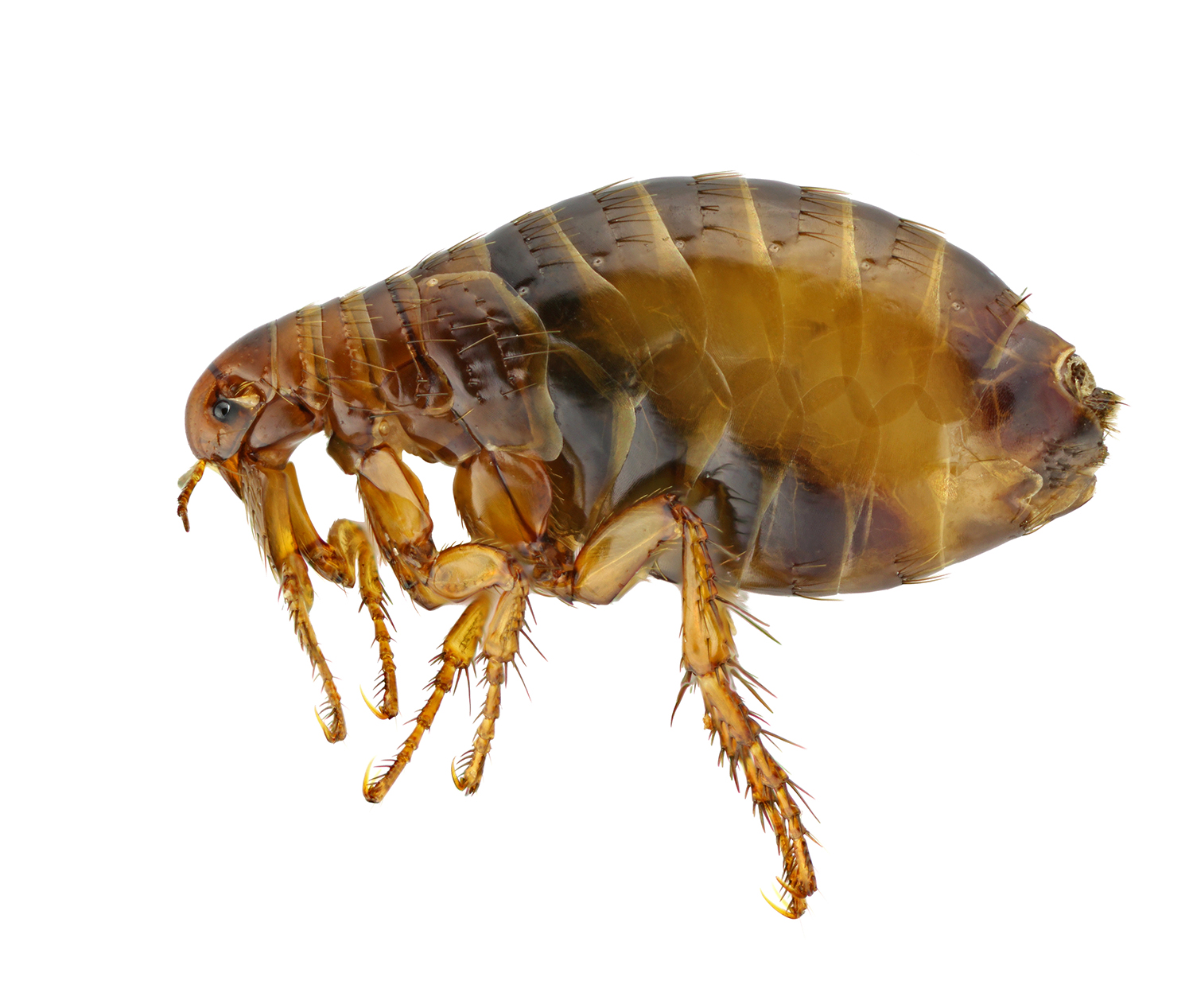
Flea
Ability Scores +2 to Dexterity, +1 to Constitution, -1 to Charisma
Size Fleas are Small in size.
Speed Fleas have a walking speed of 35 feet.
Low Light Vision Fleas can see up to 60 feet in dim light conditions, but cannot see in conditions of darkness.
Flea Nimbleness Fleas can move through the space of any creature that is of a size larger than them. They are able to long jump without moving 10 feet first, and can jump to heights of 6 + their Strength score.
Fragile Exoskeleton The hit point rolls of a flea are made at -1.
Haemophagous Fleas can heal themselves by sucking the blood from creatures. For every hit point that they suck from the victim, they heal 1 hit point, but unless the victim is held down or is willing they are able to make strength saves to shake the flea off.
Languages In addition to Common, fleas are able to speak with mundane and monstrous fleas of all kinds, as well as all sorts of haemophagous monsters.

Friday, November 27, 2015

the races of the other world with no name

The following are the most prominent races present in the other world with no name (or lizard world, for reference purposes), which is the planet that the last post is set in

The Lizard People
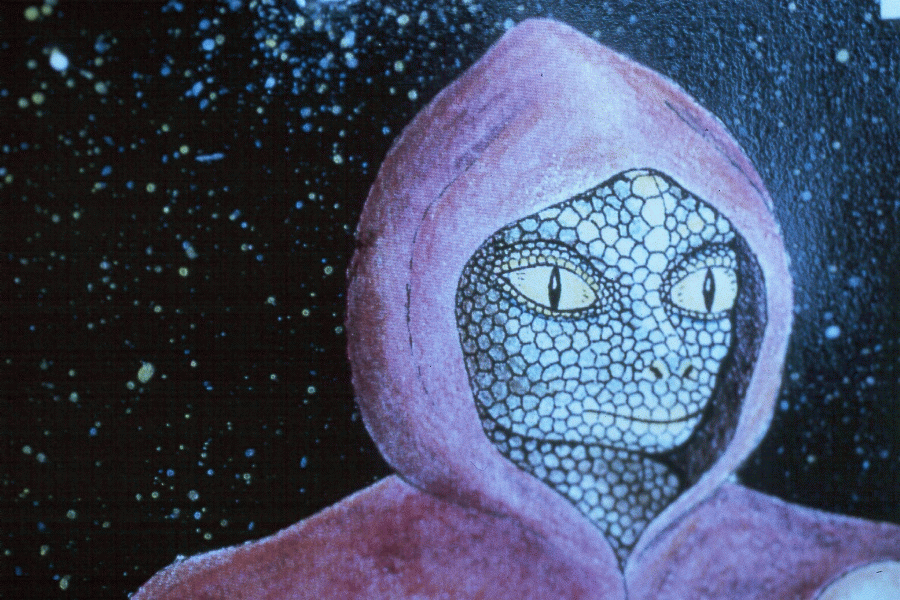
the most prominent race in the world. they essentially function as this planet's version of humans, but since mammals are extremely rare and always exceedingly violent and disgusting, humans are not present at all. there are many different cultures, ethnicities, subspecies, etc., just like humans

Elves
Since they are extraterrestrial in origin, they can be found on many different worlds. However, I have already written about them. a lot. Just think alien almost humanoid sadists, and you have the majority of what they are down.

Dark Elves (Drow)
the Dark Elves are the opposite of elves in every way. they are pacifists, instead of living in space they live underground and on the ocean floor, they are exceedingly religious (elves are all athiests), and they have inverted color palettes. for every elf alive, there is a mirror dark elf that hides away somewhere underground, worshiping the center of the world. think inverted color palette pacifist evangelical christians who worship the center of the world. Sometimes they will mutate into the terribly inverted nilbogs.

Homonculi
the homonculi are created by wizards, witches, cultists, alchemists, priests, etc. for many purposes. They are small creatures of flesh, brought to life through some arcane means, and augmented for some purposes by their creators. they are different from golems in that a golem is a hunk of material puppetted by esoteric and eldritch forces, whereas a homonculus is an actual living creature of flesh and blood (although they do tend to have unnatural abilities, and all have regenerative properties). If you cast dispel magic on a golem, it would fall apart. If you cast dispel magic on a homonculus, nothing would happen, for now they are living creatures.


Robots
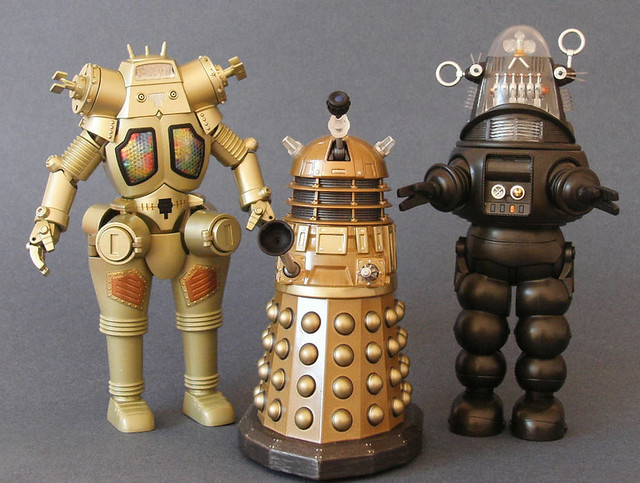
Robots are created by roving factories that swallow all of the resources that they come across and produce artificial beings that they drop off while crawling. They are made of stone, metal, plastic, wood, bone, and many other sorts of material, and they are powered by some mysterious energy. They can look like anything, and are usually made for some specific use, though that use is usually not known by the robot.

The K'Kladorf
k'kladorf are a race of eyeless giant mole crickets that live underground. They see the world through their sensitive hairs and antennae, and speak with a clicking and clacking insect language. They are hoarders of all materials/goods/items, which don't necessarily have to be valuable, and they are very paranoid at all times. They revere those who go up to the surface as heroes, like how we honor astronauts, and they are incredibly individualistic. K'kladorf enclaves/holds don't have a true leader, because each cricket believes themself to be the leader.
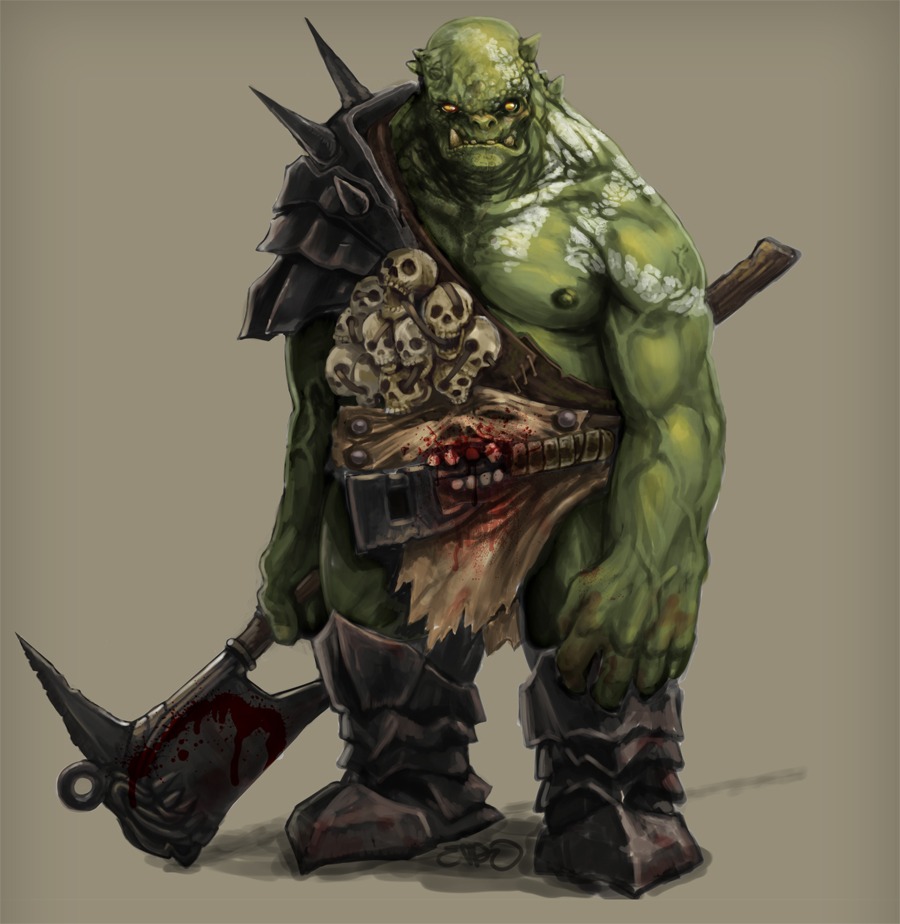
most orcas probably look like this

The Orcas
Orcas are semi-humanoid, larger than a human intelligent whales from The Wall of Whales. They have mouths filled with ravor-sharp teeth, and come in many sorts, ranging from smaller dolphin-men to great blue whale ogres. They are all obsessed with violence and with killing things, and that is truly all that they live for. Also they are famous for their "sexual depravity".
This was drawn by my friend xenon, whose art can be found at twcannibalism.tumblr.com!

Lycanthropes
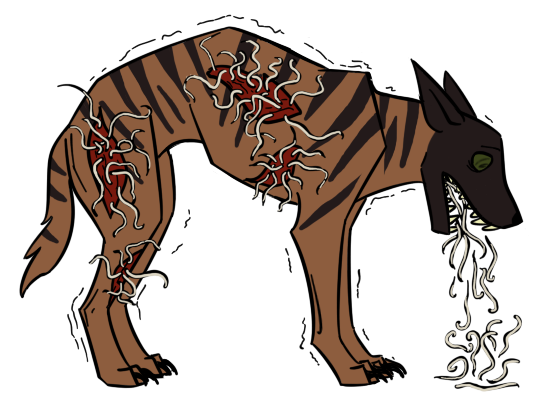
Werewolves come from the moon. Or, rather, one of the moons. They are a strange "mutant" kind of lizard person, changed by alien parasitic worms into some kind of mammalian predator, somewhere between a hound and a person, or maybe (though less common), some other mammal and a person. They are incredibly varied, even in the same familial group, and the disease can be passed down from parent to child. However, these worms are newly introduced, and thus only newly infected first generation werewolves exist.

The Vermis
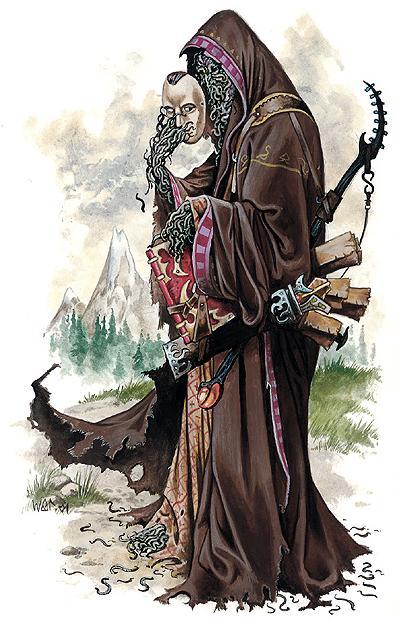
The Vermis are undead creatures. They are made when a living being is eaten by worms, who absorb the person's consciousness and wish to continue that person's life, as an undead conglomeration of worms and bugs. Some say that there are more mindless versions of these creatures that are made through other means, such as druidic magic, the powers and influence of The Graveyard, or by some collective consciousness of a group of creatures.

Gorgons
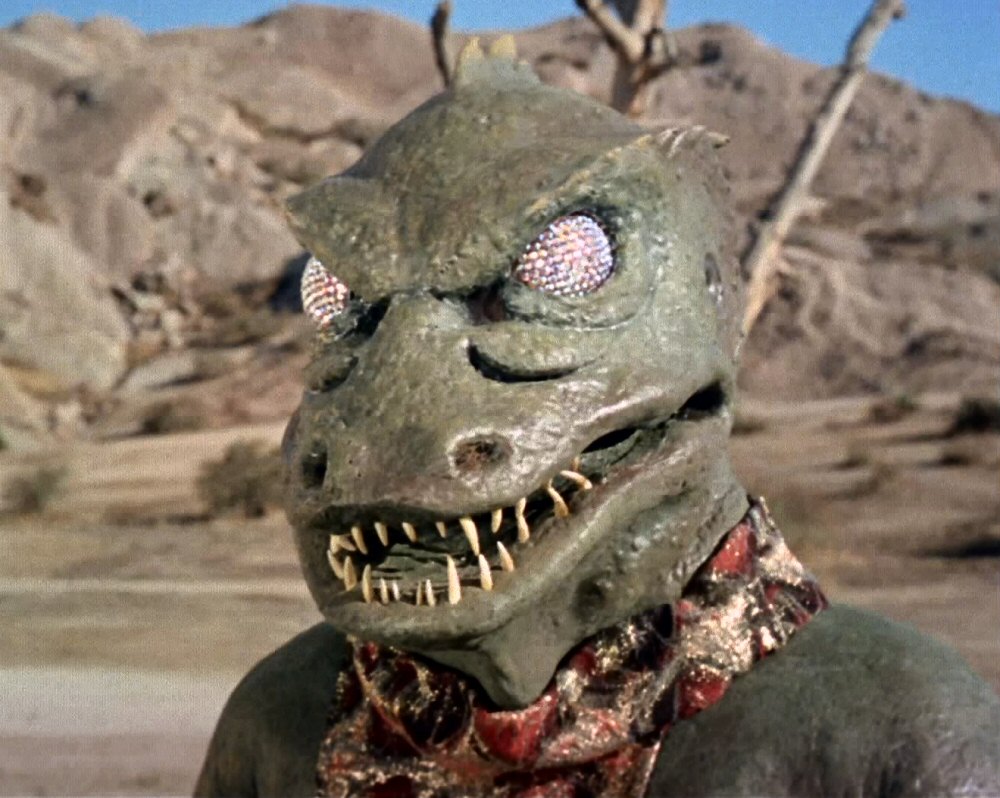
Gorgons are intelligent mammal-like reptiles with incredibly powerful venom and poisonous skin. Some say that the venom and poison of a gorgon can turn you to stone, but this is almost completely unfounded. Their venom/poison paralyzes whoever is subjected to it. They will usually walk on all fours, but can walk in a more upright fashion for a short time.

Cadavers
The Cadavers are undead creatures, in a similar vein to the Vermis, though they are more of a being's corpse rather than the creatures that fed upon a being. If something can die and leave behind a corpse, it can become a Cadaver. Cadavers will usually be rotting meaty creatures, preserved dead flesh, or a dusty and ancient skeleton, though any kind of dead thing at any point of decomposition or preservation is an option. Unlike the Vermis, cadavers usually forget their past lives before death, or only have the faintest of recollections of them.

Undines
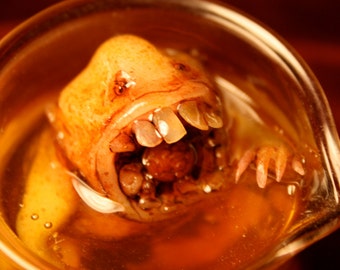
Undines are a race of aquatic amazons, of a sort. They are an all female race of fish people who have formed many warring empires and nations underwater, and even some that crawl up onto land. When underwater, they appear to be dunkleosteus, but with great variety of skin tone and other such features (some might have bright red hair-like gills coming forth from their heads). When above water, they take on a humanoid form, but they retain the toothy and bony faces of those antediluvian aquatics. They are violent, but in a more military style, rather than the Orca type of brutal combat.

is this game a gonzo game?? yes

Sunday, October 25, 2015

Races of the World With No Name, Part 1

The World With No Name is my primary pure fantasy setting, with all of the wizards, orcs, dragons, and dungeons that you know and love. Except it is actually more of a science-fiction setting where the majority of the people are uneducated superstitious peasants and thus think that all of the science is magic and that all of the creatures of the world were created in an instant by some god. Of course, there are definitely gods, they just aren't omnipotent nor universe-creating.

Below there are the basic descriptions of many of the races of this world, along with false beliefs regarding them and their true origins.

The Serpent People
The Serpent People died out many thousands of years ago, possibly millions of years ago. They had empires that spanned the entire world, they studied the origins and machinations of magic, they fought or were allies with the ancient elves, and they had incredible lifespans. What made them fall nobody knows, but now there lie in many parts of the world the strange metal, stone, and plastic machines and buildings of these ancient people, forever rotting despite their enhanced strength of material

Many of the things above are true. However, there is one thing that most people do not know about these snake folk; they used advanced genetic engineering and other sciences to create a vast amount of the races and creatures that crawl the world today.
Like this, but with more blood and claws and tumors

The Elves
I've written about elves before. Basically, they are sadistic pieces of crap.

Elves are just as old, if not older, than the Serpent People. However, unlike those snake men, Elves come from some otherworldly star or planet. The ones on our world have been stranded here for millions upon millions of years, slowly tearing the planet apart limb from limb. Elves are like an intergalactic disease, traveling from world to world only to destroy, maim, decay, and burn all in order to entertain their terrible immortal minds. They are chaotic beings from another world, and all (or most) fae creatures in the universe are descended from the original extraterrestrial stock. Elves in our world may come in many sorts, but those in space have horrifying monstrous variety. Many alien peoples know to flee when they see a vast and blubbery elfin leviathan barreling down through their atmosphere, ridden by and pregnant with the murderous violent spawn that will implode that planet.

The Humans
Humans come from many different cultures and races in our world, and they are the majority race, at least on the surface and in civilized lands.

Humans were modified from primitive and ancient apes by the Serpent People. They came in a handful of varieties that were bred for different uses, ranging from sport hunting to arena fighting to beauty pageants to information storage, which all interbred and merged together after the death of the snake empires, forming the hominid race that lives, breathes, and eats on the surface of our planet.
Upper Dwarf

The Dwarfs
Dwarfs are short human relatives that live primarily underground, and come in two main varieties.

Lower Dwarf
The first are known primarily as "Upper Dwarfs", and they are the more well known sort. Upper Dwarfs live closer to the surface, and they are short, squat, fat, and hairy. Upper Dwarfs are superstitious and xenophobic, extremely paranoid and obsessed with the forthcoming apocalypse that will wipe out all fleshy life. They create their numerous structures, statues, and robotic creations for the purpose of "surviving" after the Meatpocalypse destroys their fragile forms, and they hoard precious objects for the same purpose. Their religion is based on a mixture of the movements of the sky (astrology and astronomy) and the movements of the earth (geology), and is much more like a system of superstition than an organized religion. Upper Dwarfs are wary around strangers, and hide many, many things from them. Each dwarfish city-state has its own culture, but there are many things that shared between them (such as their religion).

The second sort of dwarf is the "Lower Dwarf", which is found in the deepest caverns and subterranean expanses. They are pale-skinned and bright-eyed, with frail and slight frames wrapped in slimy and nigh-hairless skin. They do not have large civilization, and live underground in roving gangs and tribes. They crawl on the ceilings and walls of caverns, hoarding bones, coins, rocks, and anything else they find interesting. They are quite bestial, and have no qualms over stealing and murdering anything that has something tasty or shiny in its pockets or on its bones.

Dwarfs were also created from primitive apes by the Serpent People, but they were made for more specific purposes than humans originally were. Dwarfs were crafted and bred for two primary uses: work and war. Their emotions and minds were controlled by snake chemicals and machines, to make sure they were subservient and unwavering when working, or violent and unrelenting when fighting. These chemicals and machines have been gone for generations, leading to the widespread dwarfish paranoia and xenophobia that is widespread today, among other neurological disorders. Lower Dwarfs evolved from those original dwarfs that had been isolated in the deepest caves for centuries, changing their forms to fit their cavernous environs.
He's probably hiding a big fat queen in his attic

The Halflings
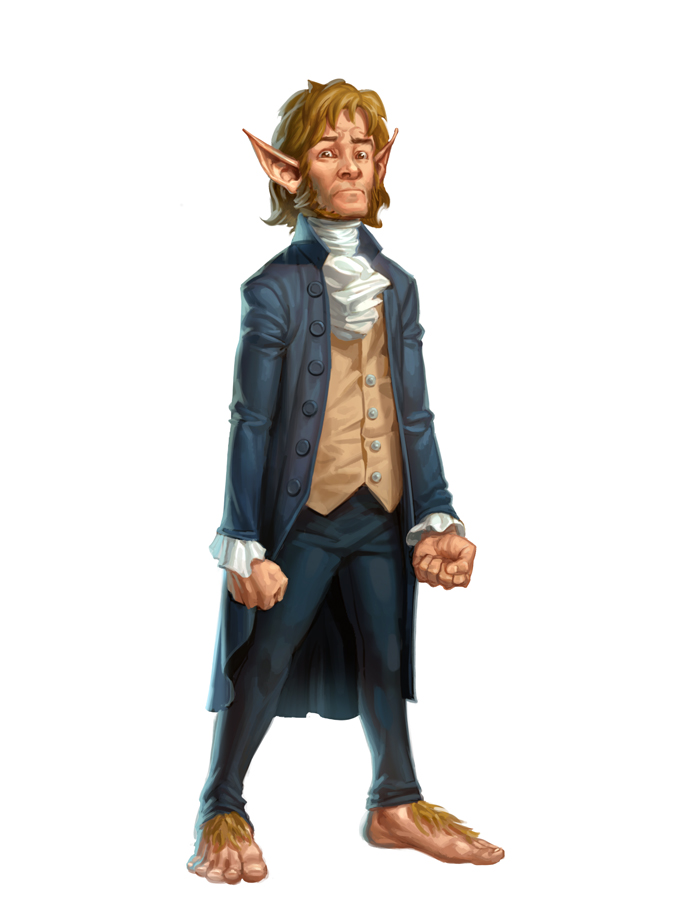
Halflings are short and slight human relatives that lived in burrows and hives out in plains regions, before they were more forcefully integrated into human societies. Unknown to most humans, they live in eusocial hives ruled by a great and corpulent queen that births all of the hobbits in the nest, with most of the hive being sterile and muscular females. They function very similarly to eusocial insects, but they are hominid in origin. In human societies, however, they will typically hide their queens in a basement or attic, and will attempt to mimic a family usual to the human culture they are present in. There are also many halflings that have left their queens, and those half-pints are called Street Goblins. They live in chaotic and unstable gangs and tribes in the streets of cities and towns, stealing from rich people, begging on the sides of streets, brawling in alleys, etc. Halflings have been created with subservience in mind, either to a Serpent Person or to a queen, and when they have no leader they devolve into instability and violence. Street Goblins are able to reproduce without the need for a queen, though how is unknown.

Halflings, similarly to the races above, were created by the Serpent People. They were engineered as easily disposable pets and messengers, with queens created to produce mass quantities of these small humanoids. Their brains were wired to serve a leader, and their bodies were made small and slight in order to easily produce them cheaply. When the Serpent People all died out, this leader instinct and small frame coincided to create the eusocial halfling burrows and hives. However, since queens were expensive to maintain, as they required fairly large amounts of food, each and every halfling drone (the sterile female halflings) have a built-in ability to produce a single child agametically, which can be activated with certain chemicals in order to produce a quick messenger.
I said they came in staggering variety

The Hoblings, Hobs, and Bugbears
Hoblings are small humanoid goblins that come in great uncanny and monstrous variety, with some looking just like small humans and others have more mutated features. Hobs are created when a Hobling reaches a certain age (varies from population to population), and enters a puberty-like stage, growing and mutating into a strong and human-sized Hob. Bugbears are a third stage in the life cycle of a Hob, and are born when either a Hobling or a Hob dies. After death, a Hobling or Hob decays and fills with insects, worms, grubs, bacteria, fungi, plants, and beasts of all sorts, becoming a monstrous undead abomination with glowing eyes of fireflies and squirming decomposers under its hairy and stretched skin, crawling on the fragile and dusty bones of the goblin.

Hoblings and Hobs are both quite different in behavior. Hoblings may seem fearful and naive, but in reality that hides a veneer of manipulation and stealth. Hoblings might seem like nothing more than simple thralls, but they are actually the ones pulling the strings. Hobs are more straight forward, and more often will bully others into submission rather than manipulation, though they are still quite conniving and controlling. Both Hobs and Hoblings are incredibly militaristic and greedy, and they love to take things from others and hurt others simply because they can. Bugbears, on the other hand, are sneaky shadow monsters and bogeymen, crawling through the night and stealing into houses and homes to their unknown deeds.

Hobs are one of the very few creation of the Elves, and were originally created as toys just to torture and as agents of the fae monsters. Hoblings were made as slight sneaks and masters of stealth, their many slight fingers useful as weapons and tools. Hobs were made more as soldiers, and they were trained to use brute force and violence to hold sway. Both stages of development become Bugbears after death simply because the Elves did not wish to lose vital assets to them. The extreme change over time was done to save on resources. Even though it may not be obvious at first, these creatures were made through collaboration with the Serpent People, during one of the periods when the two races were allies and friends.

The Orcneas
I've already written about Orcneas (they have undergone a name change). Basically, they are violent and murderous, but pretty friendly.

The Orcneas were created by the Serpent People as war machines. Dwarfs comprised the majority of soldiers (there were some Serpent soldiers as well), but Orcneas were like living tanks, siege engines, and cannons, or like berserkers, myrmidons, and other horrifically skilled and violent soldiers. Those larger sorts are called Ogres. Orcneas populations were kept low by the Serpent People, but after their death there were great booms in Orcneas populations, slowly turning into the horribly violent race known today. Their name is descended from the Serpent words for "Eaters of Corpses", due to them being fed on the rotting cadavers left behind after a battle. Orcneas are actually one of the few races made by the Serpent People who were not controlled chemically, but they were brainwashed and taught that violence and war was a game.

More is Coming Soon

Wednesday, September 9, 2015

Class and Race Week Day 2: The Mummifier and the Residual Spectre

Here is a class that slowly mummifies its body and grants itself strange esoteric powers, and a race of undead ectoplasms left over from a ghost's untime in this unworld.

The Mummifier
Parent Class: Priest
Hit Dice: d6 (+3/level after 9)
Attack Bonus: 1/2 level, rounded up
Saving Throws: as Priest (see below)
XP to Level 2: 2,750

Prerequisites to playing this class:

  • Must have a physical body that can be preserved. If the race you are playing is normally incorporeal or semi-incorporeal, you must somehow acquire a physical form. If you are playing a race that cannot be easily preserved, such as slug-people or certain elves, then you cannot play this class much, since they would be harmed by the preservation process.
Mummifiers have the following class features:
  • All experience from treasure must be spent on acquiring special materials (such as incense, wrappings, holy texts and relics, etc.) to begin or continue the mummifying process and to gain religious knowledge.
  • At level 2, your unarmed attacks are considered magical and deal 1d4 damage on a hit. This damage goes up one die type every second level (d4 to d6 at level 4, d6 to d8 at level 6, etc.). At level 4, additional damage equal to half the unarmed damage is added to weapon attacks (1d3 at level 4, 1d4 at level 6, etc.)
  • Every level (beginning at second level), you choose an esoteric power. Most esoteric powers are once a day, with a handful of at-will abilities and the possibility that a mummifier will choose the same power twice or more. The esoteric powers available vary, but some possible ones might include:
    • Speak to Stones
    • Night-vision
    • Turn Food to Dust
    • Control Flames
    • Sticks to Snakes
    • Mind Control
    • Immunity to Disease and Poisons
  • At level 9, the mummifier chooses to either unlock the ability to inflict the terrible disease known as Mummy's Rot (in addition to other possible diseases), or to be able to cure any disease.
The Residual Spectre
Ability Scores: +WIS, -CON
Racial Traits: Is incorporeal (can pass through inanimate objects and living creatures (causing a strange feeling)). Cannot use non-magical physical equipment at all. Is able to see where any living thing is at all times, but cannot see inanimate objects in darkness. Can possess living things and inanimate objects to gain a physical form, at least for a time. Can speak with the dead once per day (plus wisdom modifier if positive). When inhabiting a physical form, use the average of the host's and spectre's physical ability scores.
Class Restrictions: Residual spectres can play any class, but the majority are magic-users and priests, simply due to the immaterial nature of these small spirits. However, when inhabiting a body, they are able to utilize the physical equipment required of other classes.

Residual spectres are the remnants of immaterial undead (and some material ones as well!) when they pass through an area. They are cast off, with no memory of their parent ghost's past life, and with not much in the way of paranormal power. All they can do is take another being's physical form and contact other, much more powerful spirits in the area.

Monday, September 7, 2015

Class and Race Week Day 1: The Slime Catcher and the Dust Bunny

Here is the first pair of playable things for class/race week: a class that starts out as just a person with a lil pudding buddy but can become either a slime hunter or the arcane servant of the demon king of slimes, and a race of small constructs grown from the dust and grime lying around your house.

The Slime Catcher
Parent Class: Professional
Hit Dice: d6 (+1/level after 9)
Attack Bonus: 1/2 level, rounded up
Saving Throws: as Professional (Specialist/Thief) (see below)
XP to Level 2: 2,250

Slime catchers have the following class features:

  • +2 to saves v. slimes (any effects caused by oozes of some sort), +1 to saves v. poison
  • Can speak OOZOID, the alien language of slimes and puddings
  • Begins play with an oozing companion that can follow very simple commands. Statistics-wise, it functions as whatever the weakest slime in your game is. It can go into small spaces and do very simple actions. Can speak oozoid.
  • Is able to catch and train slimes into monstrous companions. These can be any slime, and it will usually take more time/have more risk the more deadly the pudding is.
    • Optional system to determine risk/time: it takes 1 week/hit die, and to succeed they must make a skill check as if they were trained in the skill (following the 5MORE skill system). On a failure, it either takes 1 additional week (cumulative), or you are injured by the slime.
  • At level 2, chooses one of the following features:
    • Gain a special bonus to hit and damage slimes, equal to 1/3 level, rounded up. This is in addition to your normal to-hit and damage bonuses from leveling and ability scores.
    • Gain the ability to cast spells, in a similar manner to a magic-user. All infernal enchantments come from the demon lord of slimes and oozes JUIBLEX, or from similar fiends. Gain spells as the cleric once did (with the first spell being at level 2, etc.). Special spell lists and tables will be forthcoming.
  • At level 4, gains one of the following features based on their choice at level 2:
    • Is able to track slimes and oozes and puddings with incredible accuracy (functions as if an EXPERT in the skill), and has decreased penalties when attacking recklessly or defensively against slimes (rather than penalty being double bonus, penalty is equal to bonus)
    • Can shapeshift into a slime at-will, by making a check of 1d20+level+WIS modifier, against 10+hit dice of goal slime+any other bonuses from special features. Every successful check imposes a -1 penalty, and an unsuccessful check means you cannot shapeshift for the rest of the day.
  • At level 6, gains one of the following features based on their choice at level 2:
    • All damage dealt by the slime catcher is treated as magical for purposes of killing oozes, which are normally effectively immune to physical damage.
    • Can imbue their slime servants with intellect and cunning, allowing them to follow more complex commands.
  • At level 9, gains one of the following features based on their choice at level 2:
    • Is effectively immune to the caustic effects of oozes, as well as to the powers required to destroy them. They take minimum damage from acid, fire, lightning, etc.
    • Can invoke Juiblex itself, or the fungal demon queen Zuggtmoy (as well as certain other powerful demons). They will usually require a favor or sacrifice for whatever they will do. Lesser demons can be invoked from a spell acquired at a lower level.

Dust Bunnies
Dust bunnies grow from dust and sand and hair and all other sorts of particles you might have lying around. The vast majority of them are very small, even shorter than a halfling, but there are records of almost human-sized ones from incredibly dirty ruins and abandoned structures. Dust bunnies generate naturally over time, but they can be created on purpose by wizards or even by a simple commoner with the right charms.

Ability Scores: +DEX, -STR
Racial Traits: Is able to learn very basic information from the dirt in a location. Can fuse together with other dust bunnies to create larger and stronger creatures. Is able to see in low-light conditions just as well as normal light. When fighting against larger creatures, they are adept at crawling all over them to attack (make a DEX check to crawl on a larger creature and attack them). Cannot use large weapons, and must use medium weapons two-handed (even if human-sized, unless fused together).
Class Restrictions: Dust bunnies can play any class, but the majority are fighters or professionals, followed by magic-users, followed by clerics (dust bunnies are very secular). Sub-classes typically fall into the realm of their parent class for these purposes.

Monday, June 22, 2015

Orcs


Orcs are bad news, but they can be talked to. Elves are alien and will murder and burn with reckless abandon, no matter what you say. Orcs can be reasoned with. Orcs have families and children. Even though they do have a culture of violence and don't understand death, they are much more likely to not kill you and your family if you talk to them.

Orcs worship gods that are constantly warring. Their priests drape themselves with bloody spines and crawl through the remains of battles, reading the future through the gore and viscera. All orcs carry weapons, except for the infants, who hunt with their claws and their fangs. Orc currency is skulls and teeth that they take from corpses and their fellow orcs. They make goblins work for them with intimidation, but still treat them better than humans do. They are allies with the hobgoblins, and orchestrate great war campaigns.

Orcs are obsessed with violence, but they see it as more of a game. They think that after they die, they are reborn as another orc, ready to crawl through the gore and claw at anything it sees with its new baby claws. They see death as only an obstacle, and the orc afterlife is either a gauntlet of combat that you must fight through to come back to life (if you were a good orc and murdered as many people and things as you could) or a small village, filled with seemingly friendly people who are actually extremely judging and prejudiced. You must survive in that hell of toxic people with no murder and arson for a few years, and then you come back.

Since orcs are actually extremely innocent and trusting, but love violence and war, they are taken advantage of my more tactically-minded creatures, such as hobgoblins. Even though the Church of Bog has made it so that most people today regard the orcs as some verminous sort of human, many past human societies, as well as non-Boggian cultures throughout the world, graciously accept orcs into their armies and societies. However, special systems have to be made to make sure that these orcs do not kill and burn things that they don't want killed and burned, and so they are usually drafted as low-level cannon fodder in armies, or as gladiators in arenas, where they can be told what things are okay to destroy easily. If an orc child is brought up in another society, they will become like a normal member of that culture, but when an infant they will still hunt for food. There are several cases of elves stealing orc babies and beating them into some unstoppable military force. And by beating, I mean literally beating and abusing them to do their terrible bidding.

Orcs are actually much nicer than the dwarfs and those human cultures touched by the Church of Bog. If you encounter them, they will probably help you if you are in danger, or accompany you through the wilderness. You just have to get used to them catching themselves on fire or storing their swords in their torso and be accompanied by the frenzied, cannibalistic infant orcs.

Orcs never stop growing. Some of the older orcs reach heights of 10 feet or higher, and some rumor that there are 25 foot tall orcs that fight dragons and giants deep in the wilderness.

The Orc (Race)
Class Restrictions Orcs can play every class
Special Abilities Orcs have the following special abilities and features:

  • +Strength, -Intelligence (orcs switch their Strength and Intelligence scores, but only if Intelligence is higher than Strength)
  • When you reach 0 HP, you can choose to go back up to 1 HP, rather than making the saving throw. You gain an injury from doing this, however. This can only be done once per day.
  • Your attack bonus is equal to half your level, rounded up, rather than what is normally indicated for your class (unless you are playing a fighter).
  • Orcs save at +3 to paralysis and +4 to poison.
The Orc (Monster)
HD: 1+1
AC: 16
Attacks: 1
Damage: 1d6+2
Movement: 120'
Intellect: 4-7
Morale: 7
The typical orc will have the abilities of a level 2 fighter. 50% of all orcs will be of the typical variety, with 15% being higher level fighting-types, 15% being clerical types, 15% being magic-users, and 5% being of the thief class. They will almost always be found in groups, accompanied by baby orcs, as well as goblins. They will almost never check morale, only if there is extreme danger.
A very dirty baby orc. Just give it sharp teeth.

Orc, Baby
HD: 1-1
AC: 14
Attacks: 2 (claw/claw or claw/bite)
Damage: 1d4 claw, 1d6 bite
Movement: 115'
Intellect: 3
Morale: 12
Their claw attack has a +3 bonus to hit, and their bite attack has a +2 bonus to hit. They never, ever check morale, and will only run away if taken by the older orcs. They can climb up walls at the same speed that they can crawl on the ground. These orcs are much more likely to be found alone, but their presence typically heralds a camp of orcs not too far away.

Tuesday, March 17, 2015

The Races of The Megadungeon Part 2

I forgot to say this in the last one, but those first three are the only playable races at the very start of the game, and all following races either have to be discovered or are not playable.

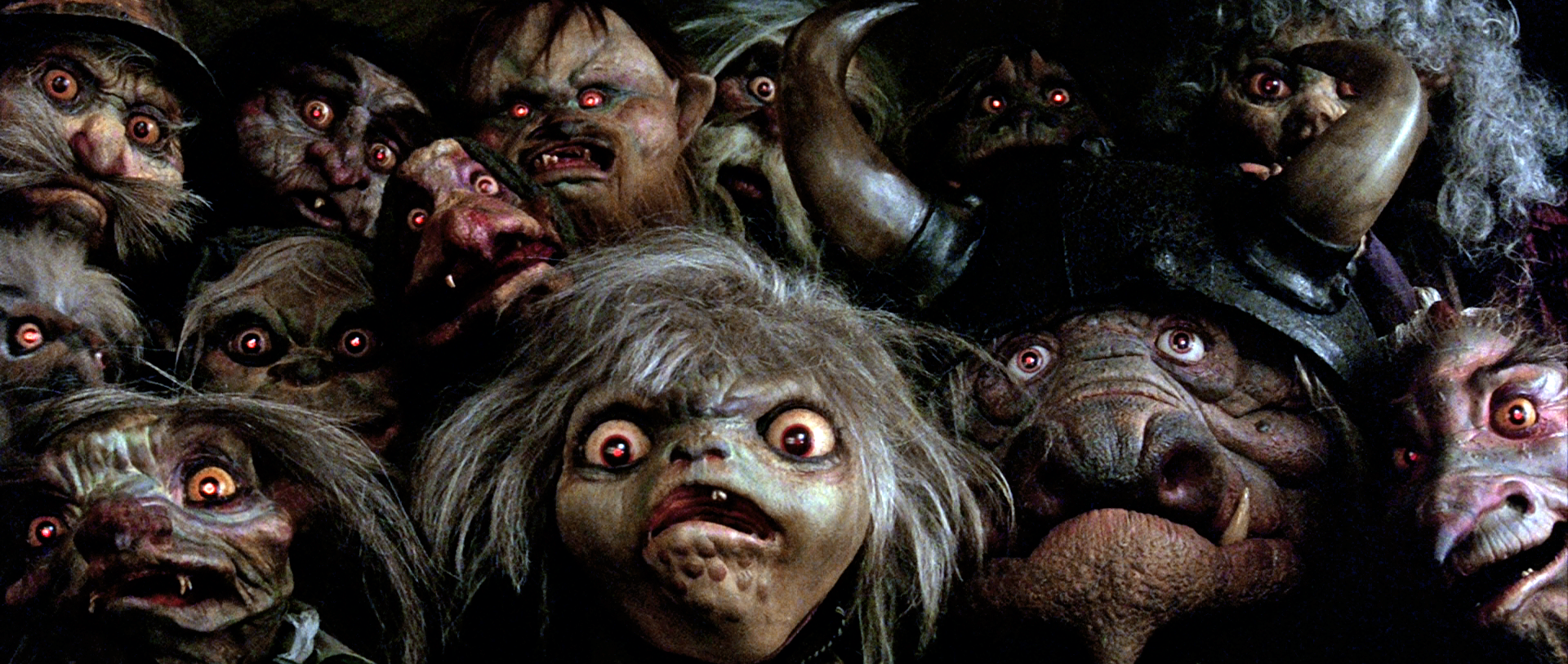
From Brian Froud and Jim Henson's movie Labyrinth
Goblins
Goblins are an incredibly populous and varied race commonly treated as a necessary evil by some, and as vermin by others. They are common enough in the nations and empires of humanity, but people, specifically humans, generally mistreat them. Nobody truthfully knows how they came to be, but there are many theories. Some say that they were mortal creatures spawned by a fae creature called the Goblin King from root vegetables such as turnips and carrots, while others, mostly clergy members, just say that they are unnatural abominations, probably descended from demons or something. They spoke of the race of orcs before humanity was introduced to them, and they claim that they were the creators of them. They are related to the race of hobgoblins.

Hobgoblins
Similarly varied, the stronger, taller, and rarer hobgoblins are generally treated as horrible brutes, and when people accept for jobs at all, they are almost always that of the more violent types, such as mercenary, soldier, or bodyguard. The first hobgoblins came into human-controlled lands from outside, and it is unknown where or why they appeared within humanity's land. They also spoke of the orcs before humanity was introduced to them, but they spoke of them more as equals rather than the way of the goblins, which was more like servants or slaves. When questioned about the creation of the orcs, they attempt to avoid the question, but always agree with the goblins about their origins. Nobody knows the origin of the hobgoblins, just like the race of goblins, and most theories stem from the theories for the goblins: they were grown from pumpkins or trees by the Goblin King, or they are stronger demons.

Orcs
Orcs were not known to the empires and nations of humanity until after they arrived in the New World to explore the Megadungeon. They are just as varied as both the races of goblins and hobgoblins. Although it is universally agreed that the goblins created the orcs, what is not agreed upon is exactly how they were created. Even the goblins never want to talk about it, simply continuing to brag about their creation of them rather than actually speaking of how they were made. People theorize about this too: the Great Church states that orcs were made from humans, possessed by demons in some foul ritual, distorted and mangled from their previously normal form. Some people say they were mutated from farm animals and wildlife with magick, citing some orc's bestial features. Some say that they crafted in cauldrons or pools by goblin witches, servants of the Goblin King, but what they are crafted from varies (some say humans, others say they are made from corpses and the beasts consuming them). The orcs themselves hate to be reminded of their creation, and always try to change the subject.

Monday, March 16, 2015

The Races of The Megadungeon Part 1


Humans
Humans have many nations and empires in the Old World, and their countries were the first to discover the New World and the Megadungeon. They founded the Great Church, and they "discovered" the race of the halflings. According to them, they are the most natural race, and so are the race that all other races are compared to.

Dwarfs
Dwarfs used to control vast swathes of land, both above and below the ground, with their immense empires. In the superstitions of many past human settlements, dwarfs controlled all that was below the ground. However, for some unknown reason, all of the empires of the dwarfs fell, leaving behind great ruins of keeps and castles. Of the dwarfs that existed, most are either dead or insane and delusional. The very few dwarfs that aren't one or the other are adventurers, not because of any grand reason, but because dwarfs really like money, and it is said that there are great treasures in the Megadungeon. Dwarfs are inherently non-magical, being unable to learn the arcane secrets of wizardly magic, but they have innate capabilities that are unknown even to them.


Halflings
The halfling people were "discovered" by humans living deep within dark and dank jungles, worshiping things labeled as demons by the Great Church and living in huts on stilts. The human nations took in the "primitives" and "uplifted" them, removing them from their tropical homes and forcibly making them join the "modern" nations. According to many, halflings will steal anything not nailed down, and it is a well known fact that they have unnatural agility and reflexes, due to the strange nature of the halflings' muscles and bones. Many halflings speak of more halflings in distant jungles and forests.